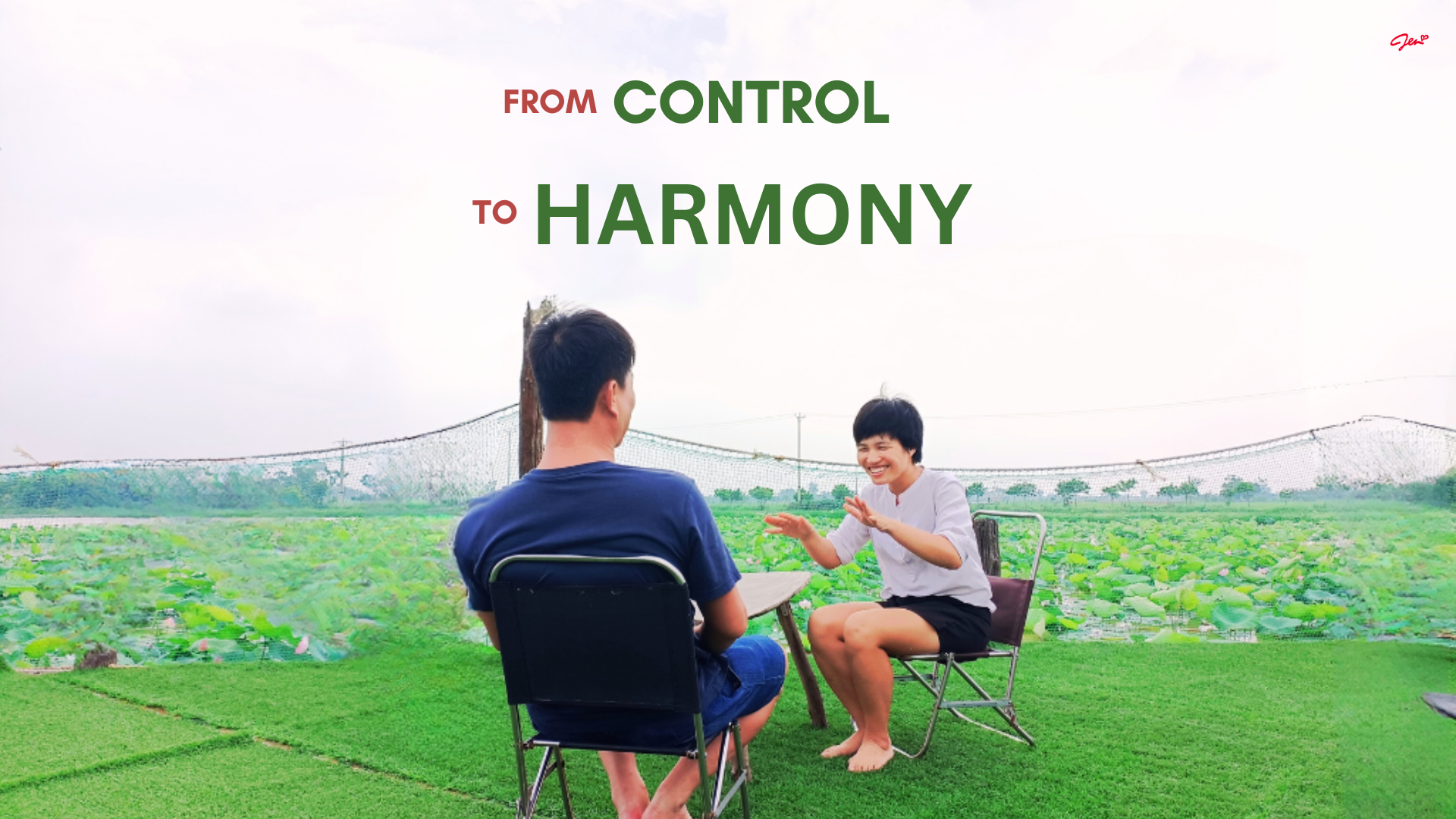
Sometimes the next level is not control. It is harmony.
“Maybe they will evolve. Or maybe we will evolve to live with them in a more harmonious way.”
— an insight from a driver
Sometimes leadership wisdom does not arrive in a boardroom. It arrives in an ordinary conversation, through an unexpected voice, and lands with unusual precision.
Recently, I asked a driver:
“If everything becomes very clean—so clean that insects and mice have no place to live—what happens?”
He paused. Then he said:
“Maybe they will evolve. Or maybe we will evolve to live with them in a more harmonious way.”
That answer stayed with me.
Because in one simple sentence, he described something many leaders spend years trying to understand:
When conditions change, life does not simply disappear.
It reorganizes.
It adapts.
It reveals a deeper perspective.And often, the deeper invitation is not merely for the environment to change.
It is for us to change with it.This is not only about ecosystems.
It is about leadership.
How we lead businesses.
How we lead teams.
How we lead ourselves through seasons that no longer respond to old methods.When leadership becomes “cleaning up”
When things feel messy, slow, emotional, or misaligned, many leaders instinctively move into correction mode.
We tighten systems.
We fix people.
We remove friction.
We optimize processes.
We “clean up” culture.Sometimes those moves are necessary.
But underneath them, there is often a more subtle pattern:
We start trying to eliminate everything that makes us uncomfortable.
The difficult team member.
The unresolved tension.
The ambiguity in direction.
The fatigue we do not want to face.
The version of ourselves that no longer feels fully in control.And this is where leadership quietly changes form.
It stops being clarity.
And starts becoming control.Not because the leader is bad.
But because uncertainty activates the part of us that wants safety faster than truth.The 3 ways leaders respond to change
When conditions shift, leaders usually respond in one of three ways:
1. Elimination
Remove what feels uncomfortable.
Fire quickly
Cut complexity
Shut down tension
Simplify aggressively
Result: short-term relief, long-term fragility.
2. Optimization
Improve what already exists.
Better systems
Clearer KPIs
More structure
More efficiency
Result: greater stability, but often a plateau.
3. Evolution
Ask what this moment is asking you to become.
What is this revealing?
What must mature?
What new capacity is now required?
Result: transformation, resilience, and sustainable growth.
Most leaders are trained in elimination.
Many become skilled at optimization.
Very few are truly developed in evolution.
And yet, evolution is where the next level of leadership lives.
Not every problem is a problem
One of the most practical shifts a leader can make is this:
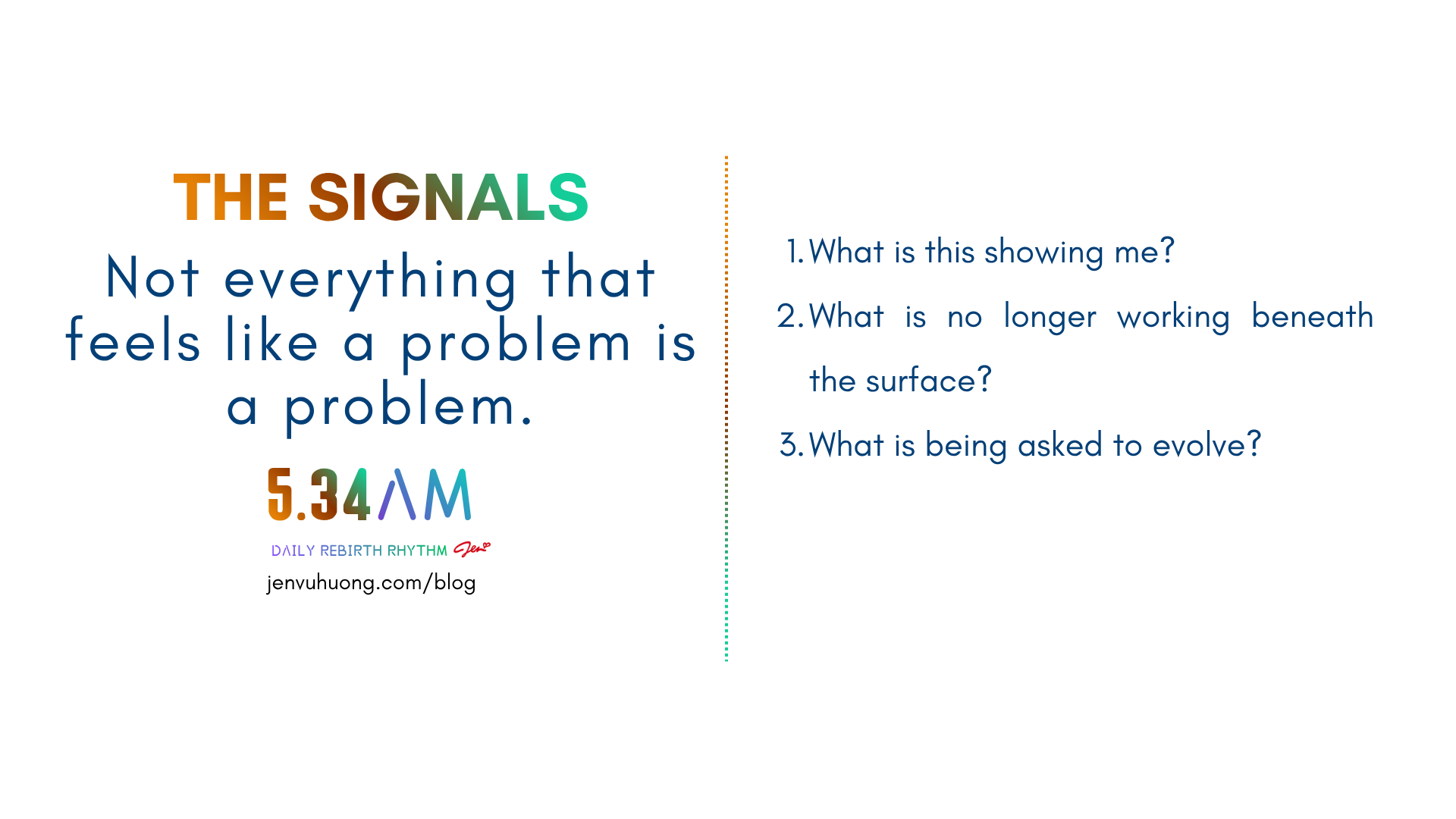
Not everything that feels like a problem is a problem.
Some things are signals.
A problem mindset asks:
How do I fix this?
Who is responsible?
How do I remove this quickly?
A signal mindset asks:
What is this showing me?
What is no longer working beneath the surface?
What is being asked to change in the system—or in me?
This matters because leaders often waste energy trying to solve what was actually meant to awaken them.
For example:
A disengaged team member may not only be a performance issue.
It may be a signal of stalled ownership, low trust, or a culture that has outgrown its current leadership style.
Constant misalignment may not only be a communication issue.
It may be a purpose issue.
A decision issue.
A clarity issue at the core.
Founder exhaustion may not only be a workload issue.
It may be an identity threshold.
Sometimes what looks operational is actually evolutionary.
The Evolution Lens: 5 questions for any stuck season
When something feels repetitive, tense, or heavier than it should, pause and ask:
1. What condition has changed?
The market?
The team?
The scale?
Your own level of awareness?
2. What no longer fits this new condition?
A structure?
A role?
A habit?
A leadership style?
3. What is trying to emerge?
A more mature culture?
A new way of deciding?
A new level of ownership?
A new version of you?
4. What in me is still operating from the old environment?
Urgency?
Proving?
Over-responsibility?
Control?
Fear of letting go?
5. What would a more mature version of leadership look like here?
Not the fastest version.
Not the most controlling version.
The wisest version.
These questions move us from reaction to conscious evolution.
The deeper leadership paradigm: control or harmony
What stayed with me most about the driver’s answer was this:
He did not say, “Remove them.”
He said, “Maybe they evolve. Or maybe we evolve.”
That is a profound leadership distinction.
Control Leadership says:
Force alignment
Remove difference
Reduce unpredictability
Prioritize efficiency above all
Harmony Leadership says:
Design strong conditions
Hold clear structure
Work with complexity
Evolve relationships, not just systems
Harmony is not weakness.
It is not passivity.
It is not a lack of standards.
Harmony is the strength to hold complexity without collapsing into force.
It is the maturity to recognize that not all growth comes from pressure.
Some growth comes from creating conditions where life can reorganize intelligently.
That is the heart of Rebirth Leadership.
For founders: the season that gets misdiagnosed
Many founders reach a moment where:
The business still works, but feels heavy.
The team still performs, but lacks aliveness.
The systems improve, but something essential feels off.
This is often misread as a performance problem.
But often, it is something deeper.
It is an identity threshold.
You are no longer the founder who built the first phase.
But you are not yet fully embodying the leader who can hold the next one.
And this is why more tactics do not always solve the tension.
Because the next step is not always to do more.
Sometimes the next step is to become different.
The 3 founder evolutions
Phase 1: The Builder
Hands-on
Fast-moving
Decisive
Highly controlling when needed
This phase creates momentum.
Phase 2: The Operator
System-focused
Process-aware
Delegation-oriented
Structure-building
This phase creates stability.
Phase 3: The Evolver
Holds complexity
Develops people deeply
Shapes identity and culture
Leads transformation, not only execution
This phase creates longevity.
Most struggle happens between Phase 2 and Phase 3.
Because this is where leadership stops being mainly about management and starts becoming about embodiment.
Not just what you run.
But who you are while running it.
Inner leadership: what we keep trying to remove
This same pattern exists internally.
We often try to “clean up” parts of ourselves:
Fear.
Overthinking.
People-pleasing.
Control.
Emotional sensitivity.
Defensiveness.
The need to prove.
But many of these were once intelligent adaptations.
They protected us.
Helped us survive.
Helped us achieve.
Helped us belong in environments that demanded a certain version of us.
So inner leadership is not always:
remove → replace
Sometimes it is:
recognize → integrate → evolve
You do not become more powerful by rejecting every part of your past self.
You become more powerful when you understand what each pattern was trying to do for you—and then consciously lead it into a more mature form.
A simple practice for this week
This week, when something feels frustrating, messy, or “wrong,” pause before you fix it.
Write:
What am I trying to eliminate right now?
What discomfort am I unwilling to sit with?
What might this moment be inviting me to learn, mature, or evolve?
Then ask:
What would the wiser version of me do here?
Not the faster version.
Not the more pleasing version.
Not the more controlling version.
The more conscious version.
That question alone can change the quality of your leadership.
Closing reflection
The driver said:
“Maybe they will evolve. Or maybe we will evolve to live with them in a more harmonious way.”
That feels like leadership wisdom for this era.
Because not everything in life needs to be removed.
Some things are here to:
stretch us
refine us
humble us
deepen us
mature us
evolve us
And sometimes the real shift is not in what is happening around us.
It is in who we become in order to meet it.
So in your business, your team, your relationships, your own inner life—
What are you trying to clean up…
that may actually be inviting you to evolve?
With love and gratitude,
Jen 🌿
#rebirthleadership #founderjourney #leadershipdevelopment #consciousleadership
A space to explore your next evolution
If you are in a season where something feels unclear, heavy, or ready for the next level—and you sense the answer is not only operational, but deeper—I’m opening a few 30-minute Rebirth Leadership conversations.
A space to:
see clearly what is actually happening beneath the surface
identify what is being invited to evolve
align your next step with who you are becoming
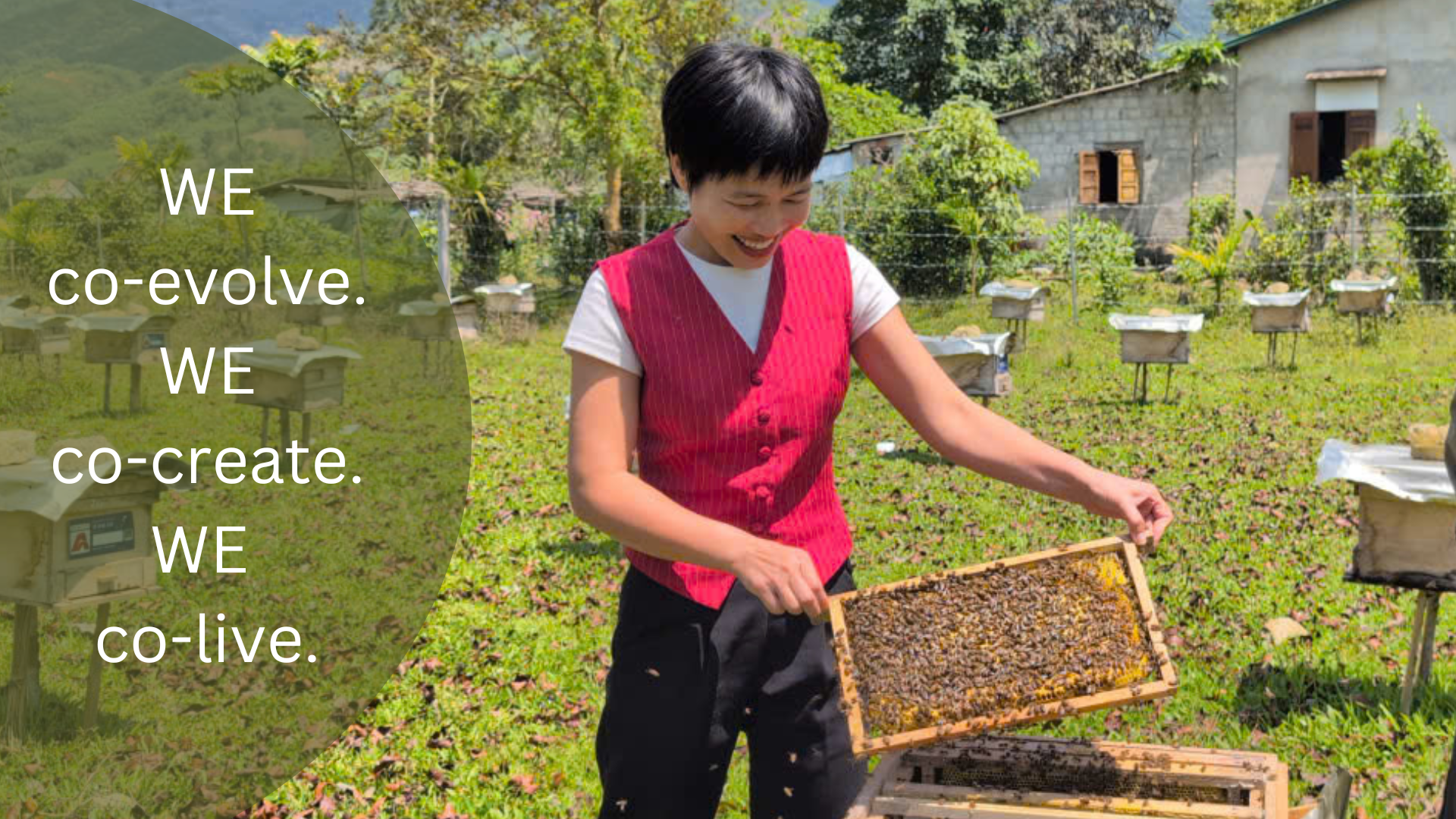
Let’s co-evolve.